Orthopedic
Spine Surgery
Surgical care designed to relieve pressure, address structural problems, and improve spinal stability and function.
The procedure, care setting, and recovery plan are determined individually with your surgeon.
Care for the structure and function of your spine.
Our board-certified spine surgeons provide procedures designed to alleviate pain, correct structural issues, and improve function. Surgical options may address herniated discs, spinal stenosis, scoliosis, and degenerative spine conditions, with the approach tailored to the patient's condition and treatment needs.
Decompression
Decompression procedures create more room for the spinal cord or nerve roots when surrounding structures are causing pressure.
Laminectomy
A laminectomy removes part of the lamina, the bony structure at the back of a vertebra. Removing this tissue can create space for the spinal cord or nerve roots in conditions such as spinal stenosis, herniated discs, or tumors.
Discectomy
A discectomy removes a portion of a herniated or damaged spinal disc. Disc material pressing on nearby nerves may contribute to pain, numbness, or weakness in an arm or leg.
Foraminotomy
A foraminotomy enlarges the foramen, the opening through which a spinal nerve exits. Bone or other tissue narrowing this opening is removed to make more room for the nerve. It may be considered when disc problems, spinal stenosis, or degenerative changes are contributing to nerve compression.
Fusion
Spinal fusion joins vertebrae together to limit movement at the treated segment and create a more stable foundation.
Transforaminal Lumbar Interbody Fusion (TLIF)
TLIF may be used for selected conditions affecting the lower spine, including degenerative disc disease, spinal instability, or herniated discs. The procedure aims to stabilize the treated segment by joining two or more vertebrae.
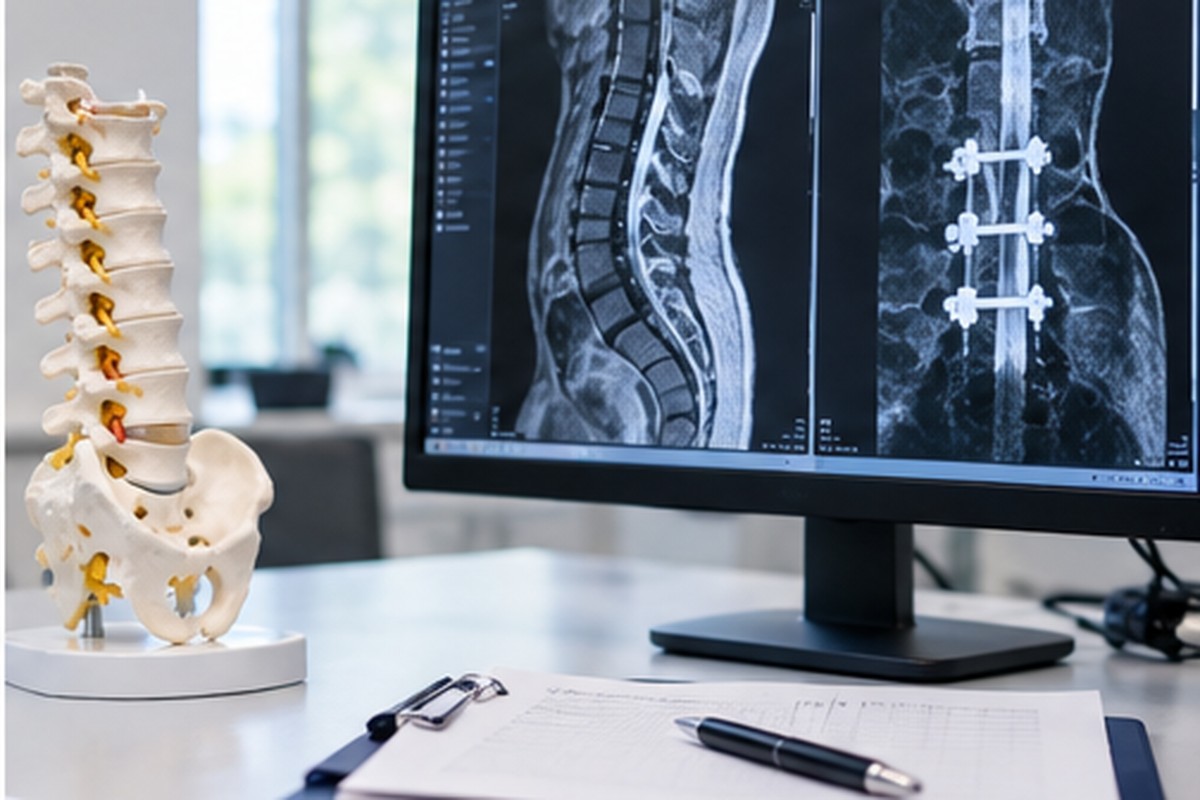
The surgeon approaches the disc through an incision in the lower back. Damaged disc material is removed, and bone graft or an interbody spacer is placed between the vertebrae to support fusion.
Screws and rods may also be used to provide stability while the vertebrae heal together.
Lateral Lumbar Interbody Fusion (LLIF or XLIF)
This approach reaches the lumbar spine from the side of the body, rather than directly from the back or abdomen. It may be considered for selected conditions such as degenerative disc disease, spinal stenosis, or spondylolisthesis.
The goal is to stabilize the affected level by joining vertebrae. Your surgeon will discuss whether a lateral approach is appropriate for your anatomy and condition.
Anterior / Posterior Lumbar Interbody Fusion (ALIF & PLIF)
Both procedures may be used for selected lumbar conditions such as disc degeneration, instability, or herniated discs. The approaches differ in how the surgeon reaches the spine.
- ALIF
- The surgeon accesses the lumbar spine from the front of the body through the abdomen.
- PLIF
- The surgeon accesses the lumbar spine through an incision in the back.
Anterior Cervical Discectomy and Fusion (ACDF)
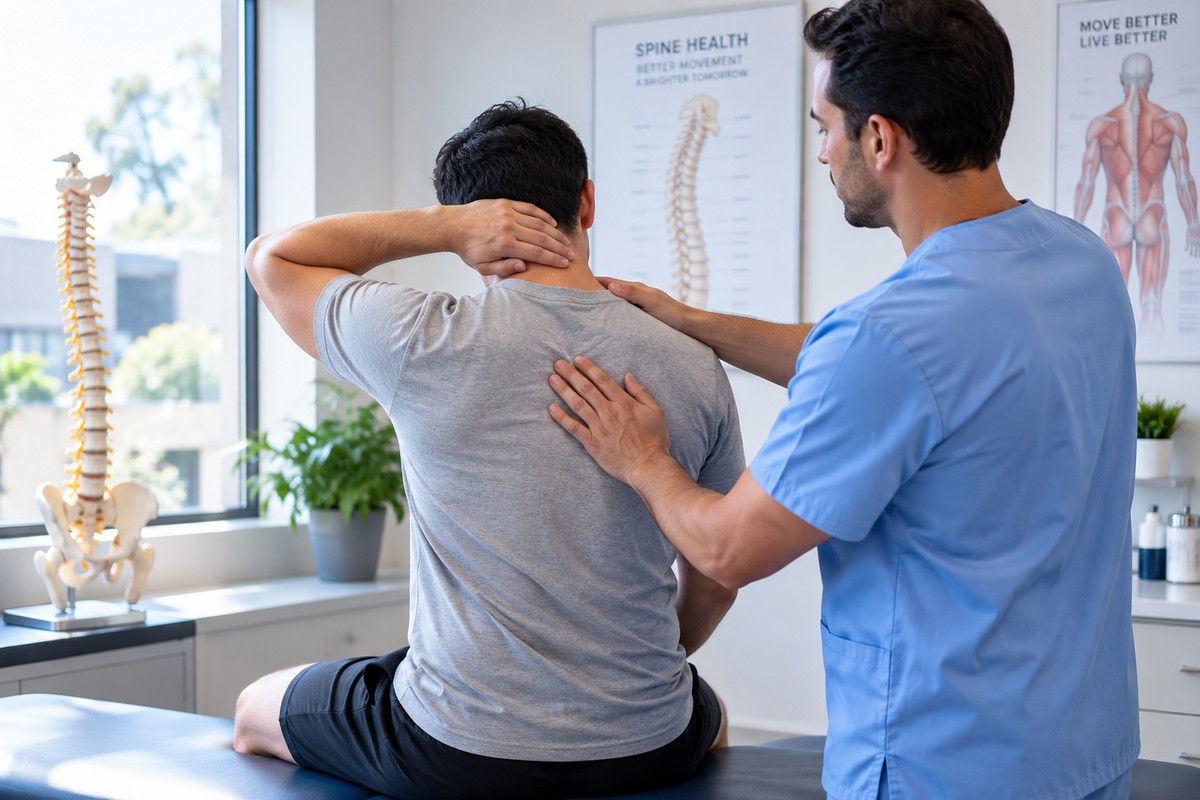
ACDF addresses pressure on the spinal cord or nerve roots in the neck. A herniated disc, degenerative disc changes, or spinal stenosis may contribute to this pressure.
Through the front of the neck, the surgeon removes the affected disc and, when needed, other tissue causing compression.
A bone graft or interbody spacer is placed in the disc space to support fusion between adjacent vertebrae. Plates and screws may be used when additional stabilization is indicated.
Hardware Removal & Inspection of Preexisting Fusion
If pain continues after a previous spine operation, your surgeon can assess the existing fusion, implants, and current symptoms. This review helps determine whether additional treatment or an updated surgical plan should be considered.
Request a prior-surgery evaluationScoliosis & Deformity Correction
Deformity correction aims to improve spinal alignment and structural stability. Instrumentation may help hold the spine in a corrected position. The surgical approach depends on the type, location, and severity of the curve and the individual patient's needs.
Fusion
Fusion may be used to stabilize a scoliosis curve, limit further progression, and improve alignment. Surgery may approach the spine from the back or front depending on the location and severity of the curve.
Growing Rods
Growing rods may be used in selected children with progressive scoliosis. They are designed to help control curvature while allowing continued spinal growth and may be lengthened as the child grows.
Osteotomy
An osteotomy involves reshaping bone to allow better spinal alignment. The location of the correction and the patient's needs guide the surgical approach.
Talk with a specialist about your spine care.
Schedule a consultation to discuss your symptoms, previous treatment, and whether surgery may be appropriate.